
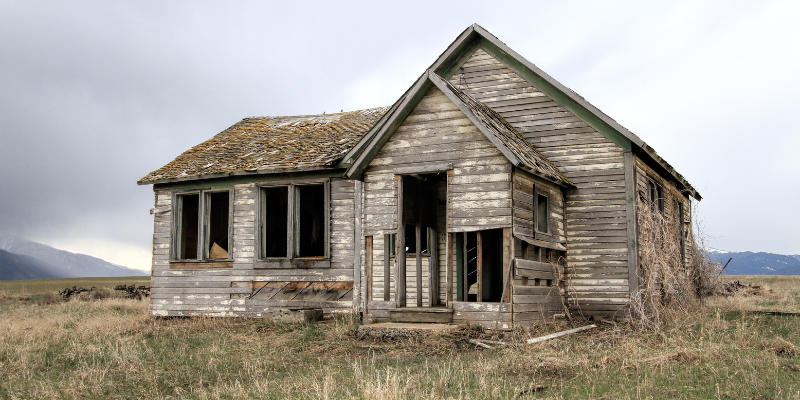
A buyer’s inspector found a second-floor bathroom that didn’t exist on any city record. The seller had no idea. Her ex-husband had plumbed it in 2009, and nobody filed a thing. If you own a house in Dallas with unpermitted work hiding somewhere in it, you’re in enormous company, and your sale isn’t doomed. It just needs handling.
Garage conversions in Oak Cliff. Patio enclosures in Lake Highlands. Sheds wired by a brother-in-law in Pleasant Grove. Unpermitted work is so common here that in all my years buying houses, I’d be more surprised by a 1950s Dallas house with a spotless permit history than one without.
What Counts as Unpermitted Work in Dallas, TX?
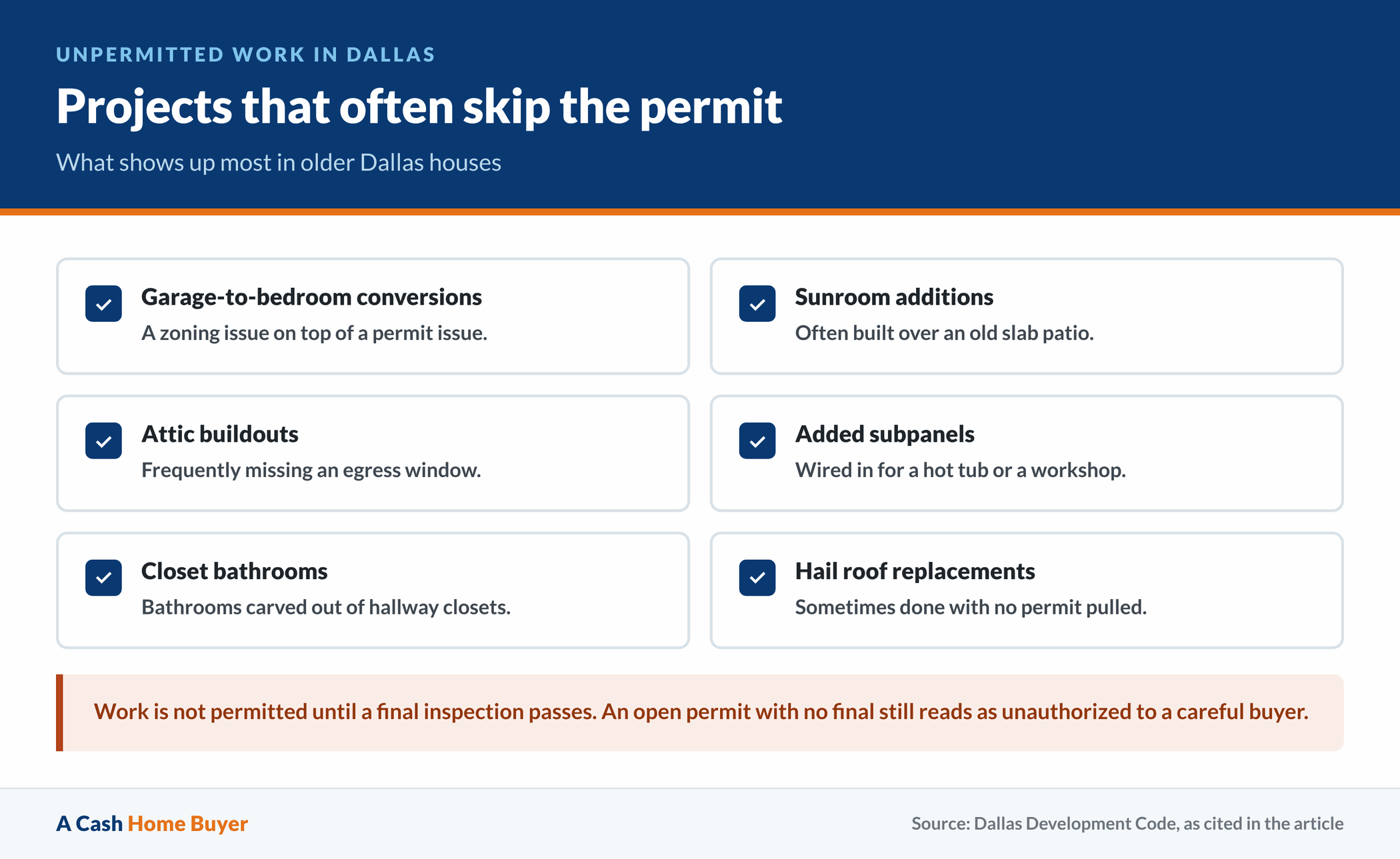
Think of a carport sitting empty. Now picture that same carport with walls, a window unit, and carpet, rented out for six years. Somewhere between those two pictures, a permit was required, and in most Dallas houses I walk through, it was never pulled.
The city doesn’t leave this vague. Under the Dallas Development Code and the amended building codes, a permit is required for anything touching structural elements, building systems like electrical, mechanical, or plumbing, new construction, or a change in occupancy. Permit authority in Dallas sits with the Development Services Department, and that department keeps a permit history attached to every parcel. Your buyer’s agent can pull it. So can the buyer.
What trips people up is scope. Painting your dining room is nobody’s business. Moving the wall behind it is, and that’s where things get real. Historic and conservation districts in Dallas add a separate layer for exterior work, which matters a lot if your house sits in Swiss Avenue, Winnetka Heights, or Munger Place.
Common unpermitted work I find in Dallas houses includes garage-to-bedroom conversions, sunroom additions built over an old slab patio, and attic buildouts with no egress window. It also includes subpanels added for a hot tub and bathrooms carved out of hallway closets. Roof replacements after a hailstorm sometimes get missed too, and that’s its own category in a city that gets pounded every spring.
Don’t just take your contractor’s word for it. Work your contractor swore was “permitted” isn’t permitted until a final inspection passed. A certificate of completion is the record showing permitted work cleared all required inspections. An open permit with no final inspection is still unauthorized in the eyes of a careful buyer.
Does Texas Law Require You to Disclose Unpermitted Work?
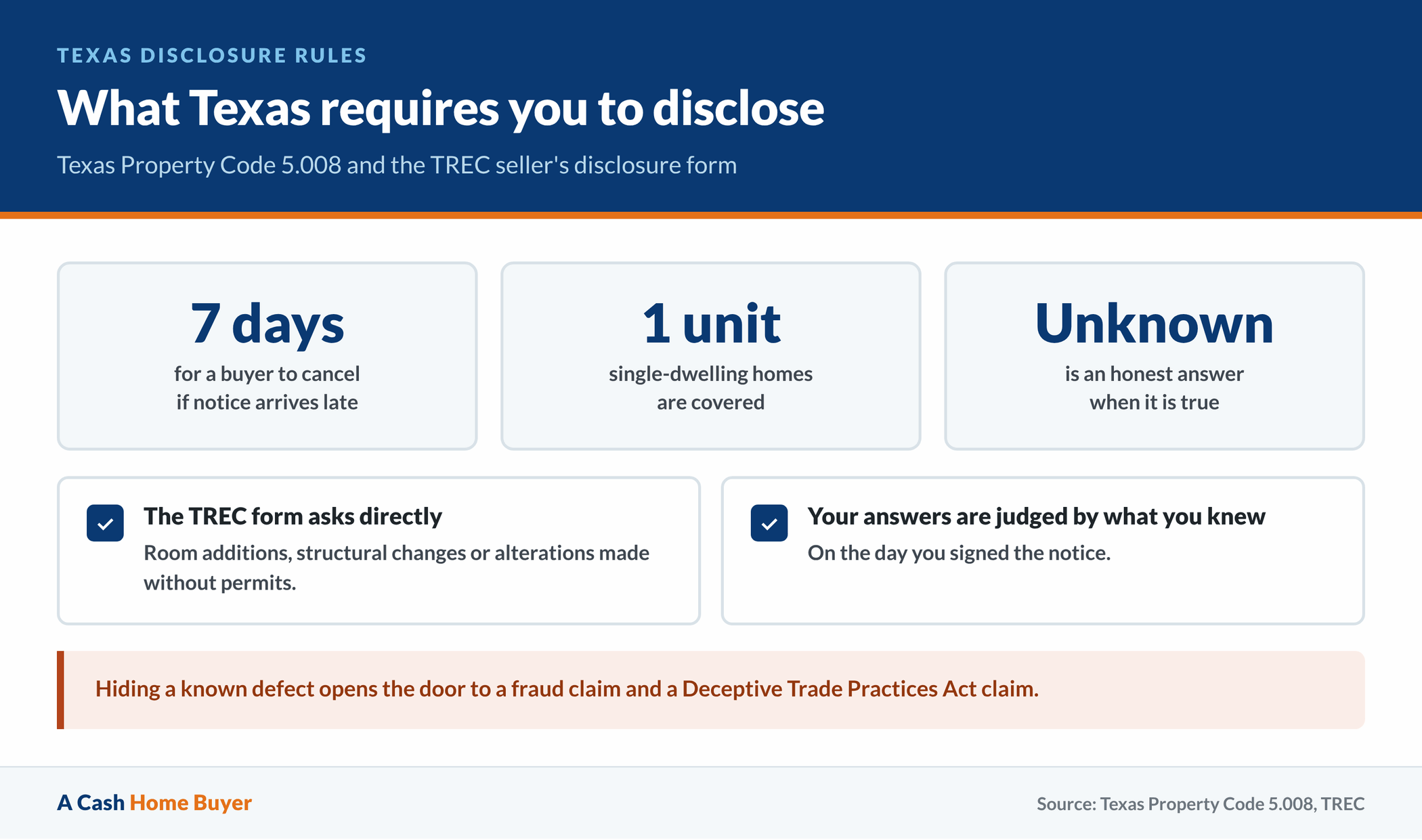
Seven days. Texas Property Code § 5.008(f) gives a buyer that window to cancel a contract for any reason after receiving the seller’s disclosure notice when you didn’t deliver it on time. Short, but long enough to kill a deal in Dallas.
The statute applies to sellers of residential property comprising not more than one dwelling unit, requiring a written notice to the purchaser. TREC publishes the form most sellers use, covering material facts and the physical condition of the property, so you can pull it straight from the TREC website. That form asks specifically about room additions, structural modifications, or alterations made without the necessary permits or not in compliance with building codes.
So yes. You disclose it in Dallas, in writing, before the contract takes effect.
Your answers are judged by what you believed and knew on the day you signed, and if something genuinely isn’t known to you, marking it unknown satisfies the statute.
A while back I bought a house near Casa View from an heir living in Oregon. Thirty years of her father’s belongings filled every room, including a garage stacked to the rafters with Reader’s Digest condensed books and three dead lawnmowers. Her siblings wanted out clean, she couldn’t name a single contractor her dad had used, and she marked the permit question “unknown” because that was the truth.
Nondisclosure of a known defect opens you to a common-law fraud claim and a Deceptive Trade Practices Act claim, and Dallas County civil courts are not a fun place to spend a year.
Can You Legally Sell a House with Unpermitted Work in Dallas?
Lie on the form and you can lose the house money and then some, because the buyer’s remedy doesn’t stop at walking away. Litigation over it in Dallas usually arrives long after you’ve spent the proceeds.
Selling itself is legal. Section 5.008 doesn’t bar you from selling a home with it; it requires you to give the buyer a written disclosure of what you know about the property’s condition. You can read the statute text yourself at Texas Property Code § 5.008.
Dallas closings with disclosed unpermitted work happen every single week.
The practical path has three parts. Disclose it on the notice, then describe it honestly in the listing remarks so no buyer feels ambushed at inspection. Then let the buyer sign an as-is addendum acknowledging the condition they already know about.
Where sellers get hurt is the soft-pedal: calling a garage conversion a “bonus room” and hoping the appraiser counts the square footage. Appraisers in Dallas won’t count unpermitted square footage the same way, and that gap shows up as a low appraisal, not as a win.
One more wrinkle specific to this city. Code Compliance can act independently of your sale, which means a complaint can trigger action whether or not you’re mid-transaction. Work completed without required permits violates city ordinances and adopted building codes, and the remedy usually runs through an after-the-fact permit application plus permit and penalty fees, with inspection of the completed work. Fee schedules change, so Dallas Development Services is the office to call for your actual numbers rather than any blog, mine included.
Will the city find it on its own? Rarely, unless a neighbor complains or you apply for something new.
How Much Does Unpermitted Work Lower Your Home’s Value?
“My house is worth what the comps say, permits or not.” I hear that one a lot, and it’s half right. Unpermitted work sets how far below that ceiling you actually land, and the discount tracks three things: whether the work is safe, whether it’s financeable, and whether it’s fixable.
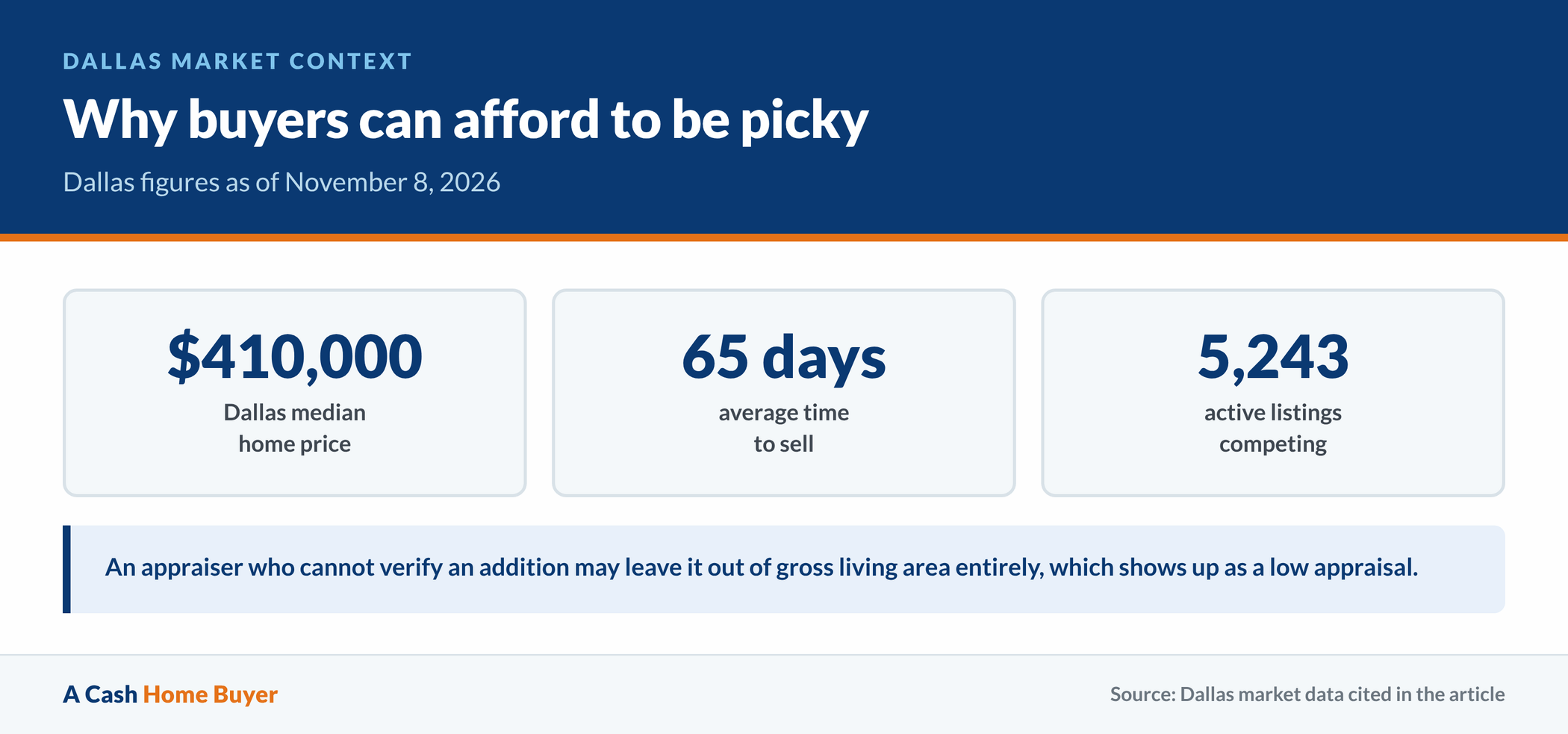
Dallas numbers give this context. As of November 8, 2026, the median home price in Dallas was $410,000, down 3.5% year over year, with homes selling in 65 days on average and 5,243 active listings competing for attention. Buyers in a market with that much inventory don’t have to tolerate complications.
Softness compounds the problem at the county level. Dallas County’s median sold price slid from $384.6K in September 2025 to $338.8K in September 2026, an 11.90% drop, per RealtyTrac’s Dallas County market data.
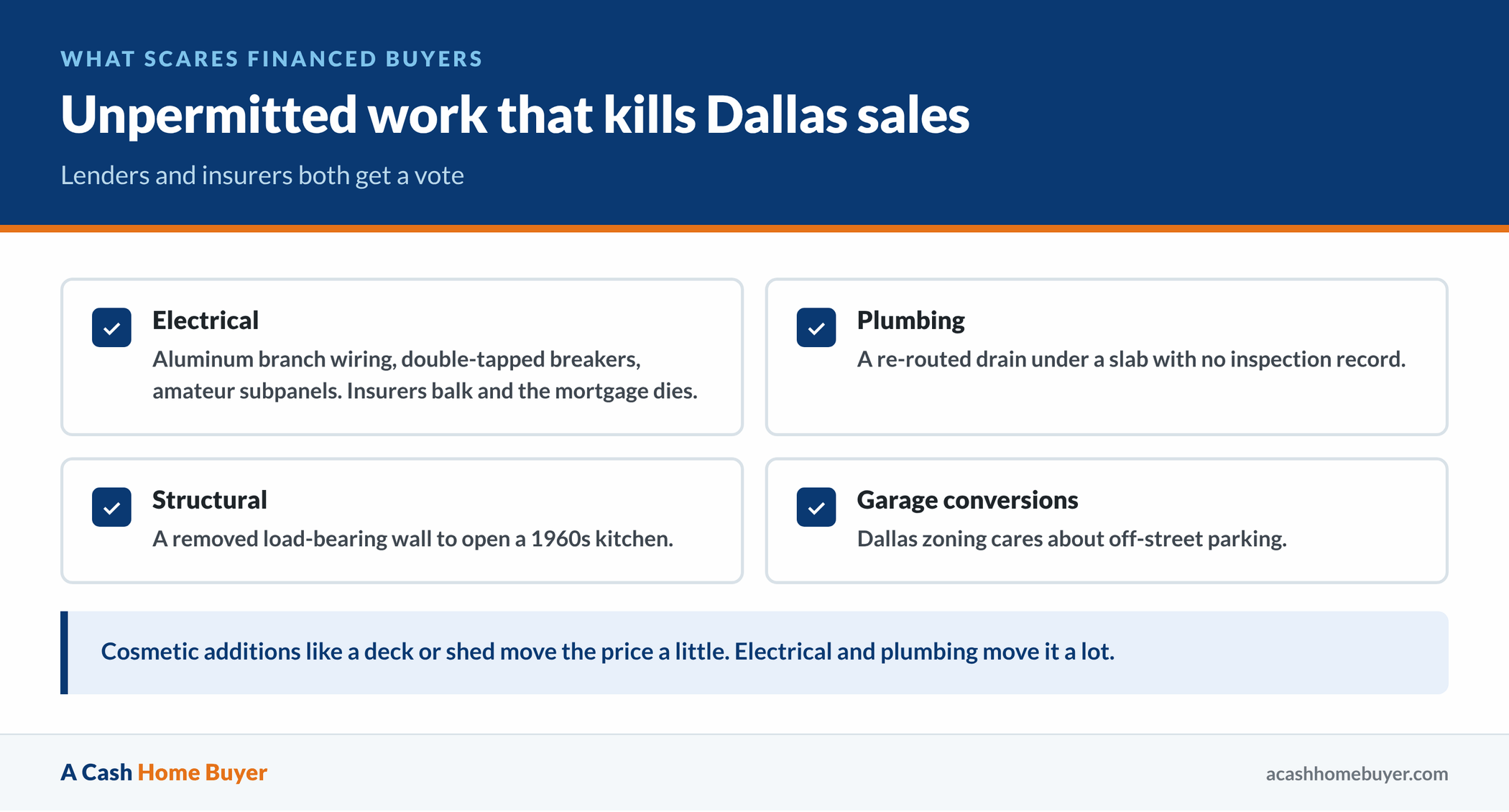
Rough rule from my own deal files: cosmetic unpermitted additions (a deck, a shed, a fence over height) move price a little. Unpermitted work involving plumbing or electrical moves it a lot, because the buyer’s lender and insurer both get a vote.
Appraisal is the sharpest edge. An appraiser who can’t verify that 400-square-foot addition may exclude it from gross living area entirely. On a Dallas house priced by the square foot, that’s not a haircut; that’s a scalping.
What Unpermitted Projects Scare Off Dallas Buyers Most?
The addition is usually survivable. What sinks Dallas deals is a sixty-dollar electrical splice behind drywall, because insurance underwriters read inspection reports and some of them simply decline.
Unpermitted electrical tops my list, the kind of issue I’ve watched kill a deal in the final week more than once. Aluminum branch wiring, double-tapped breakers, a subpanel fed by someone who learned on YouTube: an inspector flags it, the homebuyer’s insurer balks, and the mortgage dies with it. Unpermitted work can affect both insurability and financing, and in Dallas those two usually fail together.
Our clay soil already stresses lines. A re-routed drain under a North Dallas slab with no inspection record makes buyers imagine a jackhammer in their future.
Third, and underrated, structural changes. Removing a load-bearing wall to open a 1960s kitchen in Lake Highlands is extremely common.
Garage conversions deserve their own paragraph in this city. Dallas zoning cares about off-street parking, so a converted garage can be a zoning problem on top of a permit problem.
With an unpermitted roof replacement, buyers care less, generally, though a Dallas insurer may ask for roof documentation before binding a policy on a house in a hail-prone ZIP.
Would you buy a house where the inspector wrote “recommend evaluation by licensed electrician”? Most financed buyers won’t, and that’s the whole dynamic in one sentence.
Should You Fix Unpermitted Work Before Listing Your Dallas Home?
Will fixing it now actually save you money, or just delay the sale? If I were sitting at your kitchen table, I’d ask one question before anything else: do you have the time and the cash to see a retroactive permit all the way through. This includes whatever the inspector tells you to tear open.
Because that’s the real cost. After-the-fact permitting means applying for the permit, paying permit and penalty fees, and submitting completed work for inspection. That inspection sometimes means opening finished walls so a Dallas inspector can see the wiring behind them. The permit fee is the cheap part.
Legalizing pays off in one specific scenario: the unpermitted work is good, code-compliant, and adds real square footage to a house in a strong Dallas neighborhood. Bringing a well-built Bishop Arts addition onto the record can return more than it costs, and I’ve seen it swing a deal in the seller’s favor.
Common advice says legalize everything before listing. I disagree for most Dallas sellers facing a probate deadline, a job relocation, or a vacant property bleeding carrying costs. A Dallas building permit expires within 120 days of issuance if work hasn’t started, which hints at how much of your calendar this process can eat.
Sellers who ask me whether to fix unpermitted work usually already know the answer. Running an open-ended construction project from another state, or while working full time, breaks people down faster than the paperwork does.
What Are Your Options for Selling a Home with Unpermitted Work?
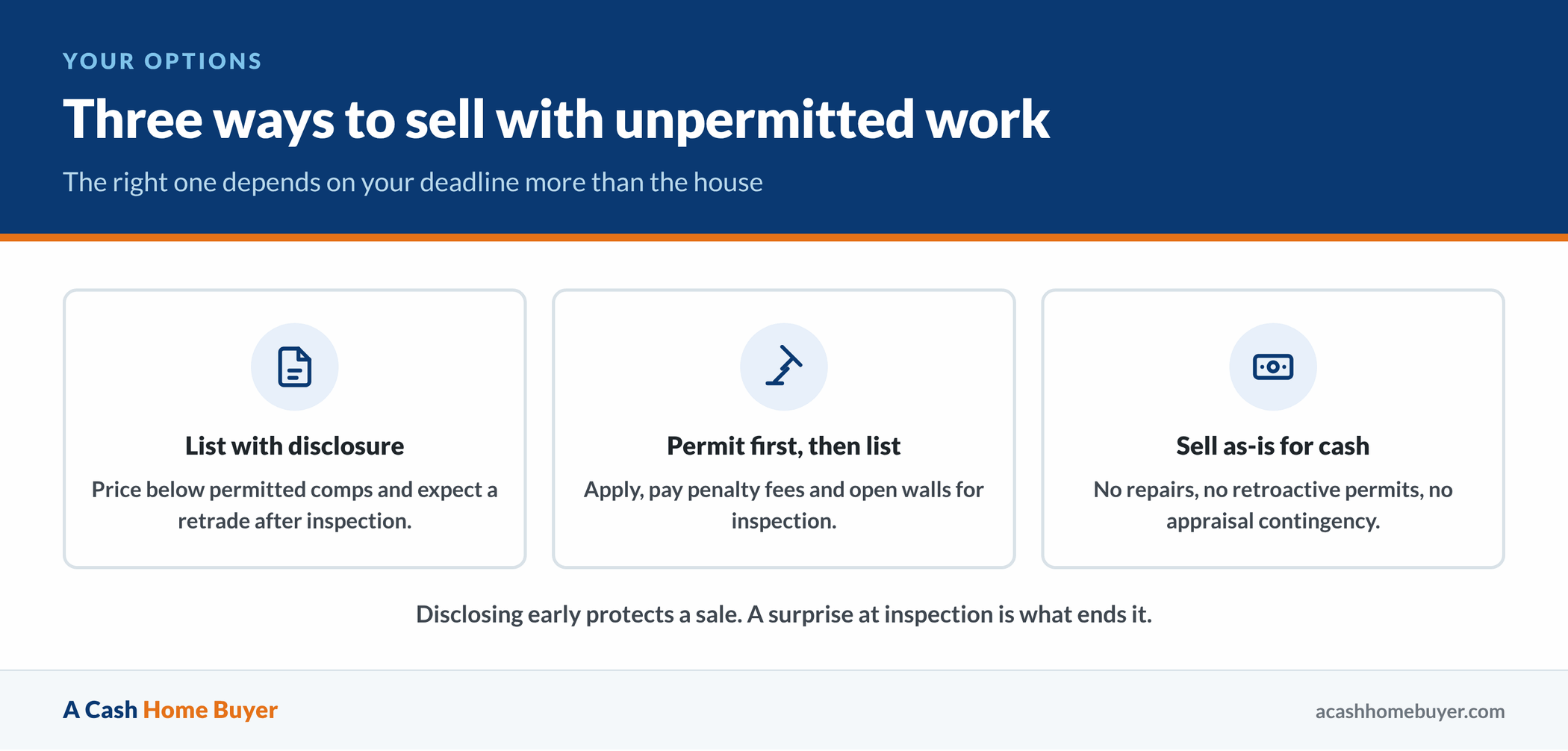
For years I told sellers that disclosing unpermitted work would cost them the deal. Wrong. Disclosure early protects deals; surprise at inspection is what detonates them.
Three paths exist. List on the MLS with full disclosure and a price that reflects the condition. Pursue retroactive permits first, then list clean. Or sell as-is to a local investor or cash buyer who prices the unpermitted work into the offer and closes without lender conditions.
The listing route works when the unpermitted work is minor and your buyer pool stays wide. Expect your Dallas agent to price below permitted comps and expect at least one buyer to retrade after inspection.
Financing is the fork in the road. Conventional and FHA lenders rely on the appraisal, and an appraiser who flags unpermitted work can trigger conditions your buyer can’t satisfy. Cash removes that concern, which is why investors are over-represented among buyers of Dallas houses with permit issues.
Selling as-is is where A Cash Home Buyer fits for a lot of folks: no repairs, no after-the-fact permits, no appraisal contingency. We still want the disclosure, because we’re planning the renovation around exactly what’s there.
Which option is right depends less on the house than on your deadline and your tolerance for uncertainty. A seller with eighteen months and savings should weigh permitting. A seller with a mortgage payment due Friday shouldn’t.
What Should Dallas Buyers Check Before Making an Offer?
Permit records in Dallas are public and searchable, and almost nobody checks them before writing an offer. The city publishes issued permits from January 2018 forward through its open data portal, including permit type, issue date, valuation, work description, and property location. You can search that dataset at Dallas OpenData in about ten minutes, free.
A buyer who does both has more information about the unpermitted work than the seller usually does.
Beyond records, you must run two more checks. Compare the listed square footage against the Dallas Central Appraisal District’s record for the property, since a mismatch often marks an unrecorded addition. And get a licensed electrician out if the inspector flags anything in the panel.
Buyers should also ask what the unpermitted work means for their own exit. You inherit the disclosure obligation when you eventually sell that Dallas house.
A landlord in Oak Cliff called me in September after carrying two mortgages for close to eleven months. He’d bought his new place first, then discovered his rental’s enclosed back porch and the wiring running to a workshop in the detached garage had never been permitted. Three financed buyers had already walked. He hadn’t told anyone, not even his brother, how far behind he’d gotten.
That sale closed as-is in under three weeks, unpermitted work and all.
Frequently Asked Questions
What Happens If I Buy a Dallas House with an Unpermitted Addition?
You take on the addition and everything attached to it: possible code enforcement action, trouble insuring that portion of the home, and the obligation to disclose the unpermitted work to your own buyer someday. Dallas Development Services can tell you whether the addition can be permitted after the fact and what inspections it would need. Price the unknown into your offer rather than assuming it’ll be simple.
Will a Dallas Appraiser Count Unpermitted Square Footage?
Often not, or not at full value. Appraisers in Dallas weigh whether the work was permitted, whether it’s built to a comparable standard, and whether local buyers would pay for it. An addition that reads as permanent and well-finished may get partial credit, while a converted garage with a window unit usually gets very little.
Can I Get a Mortgage on a Dallas Home with Unpermitted Work?
Sometimes, depending on the lender and what the appraiser writes. Underwriters get nervous about unpermitted work involving electrical, plumbing, or structural changes, and they can condition the loan on repairs or permits before closing. Cash offers avoid the issue, which is one reason as-is sellers see so many investor buyers.
Do I Have to Disclose Unpermitted Work I Didn’t Know About?
You disclose what you know when you sign. If you genuinely don’t know whether a previous owner pulled permits, say so on the form instead of guessing either direction. Heirs selling an inherited Dallas property and landlords who never lived in the house use that answer honestly all the time.
Does Homeowners Insurance Cover Damage From Unpermitted Work?
Coverage questions belong to your carrier, and answers vary by policy. Insurers have denied claims tied to unpermitted electrical and plumbing, and some decline to write a policy at all once an inspection report surfaces the issue. Ask your agent directly about the specific unpermitted work in your Dallas home before you rely on the policy.
How Fast Can I Sell a Dallas House with Unpermitted Work?
Listing it means pricing for the condition and waiting out the market, which in Dallas right now runs slower than it did two years ago. Selling as-is to a local cash buyer typically closes in one to three weeks, since there’s no appraisal, no lender, and no repair negotiation. Your timeline mostly depends on which path you pick.
If you’re staring at a Dallas house with unpermitted work and you’re not sure what it’s worth or who’d buy it, I’m happy to talk it through. Tell me what’s there, what you know, and what you don’t, and I’ll give you a straight read on your options, including the ones that don’t involve selling to me. No pressure, no obligation, and no judgment about the carport.
Selling a House With Permit Problems in Dallas
Homes across the Dallas-Fort Worth area took a median of 64 days to go off the market in October 2026, according to FRED data from the St. Louis Fed. A house with open permit questions usually takes longer than that.
We buy houses with unpermitted additions, conversions and wiring across Dallas and over in Fort Worth, with the work priced into the offer.
Talk Through Your Unpermitted Work
Tell us what was built, what you know about it and what you don’t, and we’ll give you a straight as-is number to weigh against permitting or listing. When you’re ready, contact us or fill out the short form below.
Helpful Dallas Blog Articles